
We’ll cover everything from setting up your spreadsheet to generating insights and visualizations. By the end, you’ll be well-equipped to produce professional-level statements with ease. To determine automation ROI, weigh system costs against measurable benefits. Then compare this investment against savings from fewer errors, faster processes, and productivity boosts. Focus on both direct savings and broader positive effects across financial operations. New technology adoption often requires workflow adjustments that can challenge teams used to manual methods.

What is Financial Statement Automation?

By upgrading to Phocas Business Planning and Analytics, your finance team can enhance collaboration, reduce the time spent on administrative tasks, and focus on becoming strategic financial advisers. Several technologies are fundamentally changing how financial reporting works. Cloud computing enables contribution margin businesses to scale their financial systems and manage increasing data volumes efficiently. Real-time data integration gives teams immediate access to financial information, speeding up analysis and decisions.
- Having AI in finance changes this narrative by bringing real-time, automated reporting and financial analysis into the mix.
- By specifying data points like revenue, expenses, and balance sheet figures to ensure accuracy in extracted data.
- Automated financial reporting tools often include pre-built templates and customizable dashboards to streamline reporting and data visualization.
- Learn how governance, risk, and compliance strengthen organizations by improving decision-making, managing risks, and ensuring compliance.
How does automation differ from traditional methods of financial reporting?
- Consider factors such as scalability, security, and customer support when making your decision.
- Excel’s AI tools can help you create professional-looking reports that are easy to understand and share.
- The advantages make automated financial reporting software an attractive option for many small and mid-sized businesses.
- You can automate financial statements in Excel by using OCR data extraction tools to pull transaction data from bank statements, invoices, and receipts.
- This leads to deeper insights, better forecasting, and smarter resource allocation.
- The four main types of financial documents are bank statements, invoices, receipts, and tax forms.
This revolutionizes the efficiency and accuracy of your financial operations. Automated reporting software is built to work well with the tools finance teams already rely on. A key advantage of automated reporting software is its ability to scale alongside a business’s growth. By preparing appropriately and following best practices, finance teams at any company should find financial reporting automation to be an indispensable tool. First, meet with your finance team and determine what is currently working well, what needs to be improved and exactly which manual functions need to be automated.
- If your financial data is a puzzle, every piece of information about your budgets and accounting must fit together perfectly.
- Learn effective methods to calculate rebates and enhance your business performance.
- Automation will handle the manual, repetitive tasks that traditionally took up significant bandwidth, allowing for finance staff to focus on more complex analysis and strategic decision-making.
- It includes many checks between the financial statements, notes and general ledger balances.
- See how AI-powered collaboration helps finance teams align faster and drive clarity, ownership, and action across the business.
- For example, the software connects to the invoicing and payment processing systems and automatically records data when a transaction occurs.
- This could include anything from your accounting software and ERP systems to CRM platforms and other databases.
Change Management

With automated financial reporting software, you can streamline automate a companies financial statements the tedious yet critical task of validating and cleansing financial data. Before starting implementation, establish clear goals for your automation initiative. Do you want to cut down on manual errors, speed up reporting cycles, or enable your team to focus on analysis?
- This revolutionizes the efficiency and accuracy of your financial operations.
- It stands out for its ability to quickly and accurately spread financial statements in just a few clicks.
- Companies need automation solutions that maintain compliance while providing clear audit trails and protecting sensitive data.
- Enhancing transparency and accountability for organizations, integrating ESG factors into financial reporting is crucial.
- By leveraging these technologies, the software captures financial details from receipts, invoices, purchase orders, and bank statements while integrating directly with accounting platforms.
- Additionally, blockchain technology provides enhanced security and verification capabilities for financial transactions and reporting.
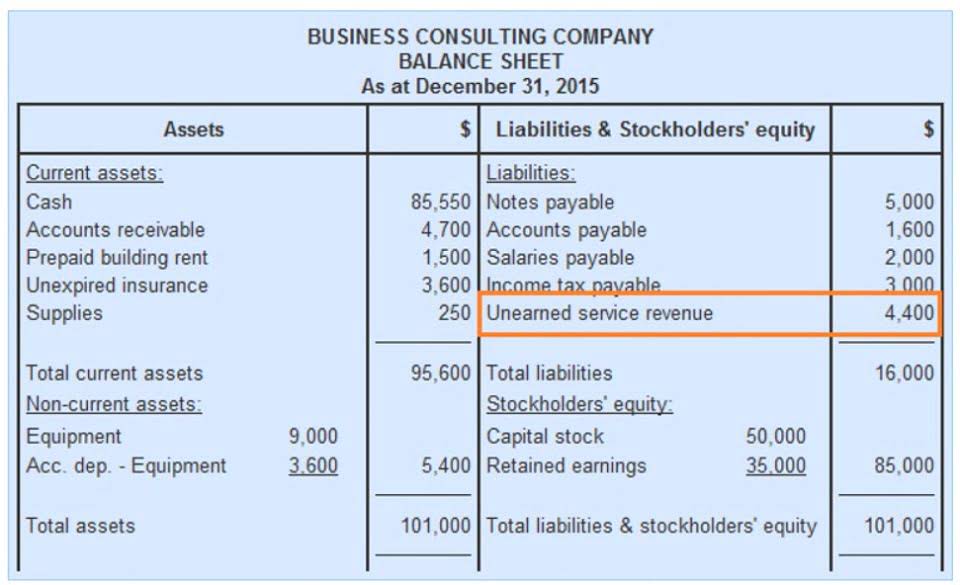
The final stage of financial statement automation involves generating and distributing reports. The software automatically compiles the processed data into various financial statements, including balance sheets, income statements, and cash flow statements. These reports can be customized to meet specific reporting requirements and can be generated on a predetermined schedule or on demand. Automated distribution ensures that stakeholders receive timely access to the information they need, facilitating better communication and informed decision-making. No more manually creating and sending reports—the system handles it all, ensuring accuracy and efficiency throughout the entire reporting process. For more information on automated report generation, explore HubiFi’s pricing plans to find the best fit for your business.
Know Your Customers Better & Faster
Get your customer audited balance sheet, annual return & reports, incorporation certificate, MoA/AoA, Charge forms, and other documents in a few clicks. Upload company public documents & generate Remote Bookkeeping report in PDF or excel formats instantly. Additionally, you can use macros to automate repetitive tasks, such as formatting or chart creation. This allows you to focus on analyzing the data rather than spending time on manual updates. Excel’s AI doesn’t just analyze data; it can also generate meaningful insights that can inform your business decisions. You’ve got Excel open, and you’re ready to dive into the world of AI-driven financial statement preparation.
